
![]() TL;DR (Because We All Love a Spoiler)
TL;DR (Because We All Love a Spoiler)
- Titanium flat irons are the top choice for users who value speed, power, durability, and consistent results.
- Ceramic flat irons are gentler and beginner-friendly but not as efficient or long-lasting.
- The real deciding factor is your hair type, heat needs, and expectations.
- For most users (especially those with thick, curly, coarse, textured, or hard-to-smooth hair) titanium wins.
Understanding Titanium Flat Irons
You’ve probably heard of it everywhere from chemistry class to the Billboard Top 100. Titanium is that metal that you associate with strength and resistance, and in the heat-styling world, it lives up to that reputation. It’s ultra-strong, lightweight, corrosion-resistant, and heats up quickly and evenly. But what does that mean for hair?
The Benefits of Titanium Plates
- Fast and Consistent Heat - Titanium plates heat quickly and maintain their temperature evenly from edge to edge. You don’t lose power mid-pass, and you don’t get that one finicky section that you need to keep revisiting.
- Efficient Straightening in Fewer Passes - Titanium transfers heat more efficiently, making it perfect for smoothing cuticles. Fewer passes = less damage, less time, and more shine.
- High Heat = High Performance - Titanium irons aren’t shy about power. They reach higher temperatures and keep them.
- Durability That Outlasts Your Other Tools - Titanium plates don’t chip or wear down without a fight. You get reliable glide and performance long after a ceramic plate would’ve tapped out.
- Ultra-Smooth Glide (Zero Drag) - The slick surface reduces snagging and friction, which is a huge plus when straightening textured hair.
Who Titanium Flat Irons Are Best For
- Thick, coarse, curly, or resistant hair
- Users who straighten daily
- Professionals (or anyone who wants pro-level results)
- Anyone who wants fast, efficient styling
- Anyone who wants a higher heat variability on their tools
Understanding Ceramic Flat Irons
Ceramic is the OG of “gentle heat” technology, known to be forgiving, consistent, and accessible. While it doesn’t have titanium’s firepower, it has its strengths.
The Benefits of Ceramic Plates
- Smooth and Even Heat Distribution - Ceramic heats evenly, which helps avoid hot spots that can burn hair.
- Gentle on Fine or Fragile Hair - Ceramic warms up smoothly and is less aggressive on delicate hair types.
- Soft and Polished Finish - Ceramic delivers a silky, traditional polish that many users love.
- Beginner-Friendly - The heat output is approachable. Less intimidating for users still learning proper technique.
Who Ceramic Flat Irons Are Best For
- Fine or damaged hair
- Beginners
- Straight or wavy hair that doesn’t resist smoothing
- Occasional users
Head-to-Head (Comparison Charts Make Life Easier)
|
Feature |
Titanium |
Ceramic |
|
Heat Speed |
Extremely fast |
Moderate |
|
Heat Retention |
Excellent |
Good |
|
Durability |
Very high |
Moderate (chips over time) |
|
Best Hair Types |
Thick, curly, resistant |
Fine, delicate |
|
Performance |
High-powered, pro-grade |
Gentle, beginner-friendly |
|
Finish |
Sleek, glassy shine |
Smooth, soft shine |
|
Number of Passes Needed |
1–2 |
Often 2–4 |
|
Long-Term Value |
Exceptional |
Good, but depends on plate wear |
Choosing the Right Flat Iron for You
It isn’t just marketing hype (believe us, we know): for most users, titanium is the better choice. Flat iron materials and design have advanced, and titanium keeps pace with the demands of modern hair styling. Its efficiency, durability, and versatility make it the top pick for professionals and at-home styling enthusiasts users alike.
Why Titanium Flat Irons Come Out on Top
1. They Work for More Hair Types
Titanium provides the power and heat needed to straighten, smooth, and style hair that resists other tools. While ceramic irons perform well on fine hair, titanium works across nearly all hair types, including:
- Medium hair
- Thick hair
- Curly hair
- Coily hair
- Coarse hair
- Frizzy hair
- Color-treated hair
- Hard-to-smooth textures
2. They Deliver Faster Results
Titanium irons heat quickly and maintain stable temperatures. This efficiency:
- Saves time for both professionals and everyday users
- Reduces the number of passes needed on each section
- Minimizes heat exposure, lowering the risk of damage
3. They Last Longer
Ceramic plates can chip, crack, or lose their finish over time. Titanium plates:
- Retain smoothness and integrity for years
- Provide consistent glide and styling performance
- Reduce the need for frequent replacements
4. They Handle Modern Styling Trends
Titanium flat irons can handle a range of contemporary and classic styles, such as:
- Sleek, polished straight hair
- Glass hair finishes
- Silk presses
- S-waves and ribbon curls
5. More Features, More Power
Many titanium irons now integrate professional-grade technology:
- Ionic technology for frizz reduction
- Infrared heat for gentle heat penetration
- Smart temperature controls
- Lightweight and ergonomic designs
- High-grade titanium plates for performance that lasts
Pros & Cons: Titanium Flat Irons |
|
|
Pros |
Cons |
|
|
|
Pros & Cons: Ceramic Flat Irons |
|
|
Pros |
Cons |
|
|
Elevating the “Titanium vs. Ceramic Flat Iron” Conversation
When it comes to titanium vs. ceramic flat iron, we know it can be overwhelming to choose the right tool. At StyleCraft, we’ve designed our Sage and Stay‑Temp collections to go beyond standard flat irons. With features like titanium plates, ionic output, vibration, and precise temperature control, our tools help us style hair more efficiently, reduce frizz, lock in moisture, and minimize heat damage. Below, we’ll show you what makes each collection unique and why they stand out in the titanium vs. ceramic flat iron debate.
Stay-Temp Flat Iron: Precision + Polish with Advanced Titanium Tech
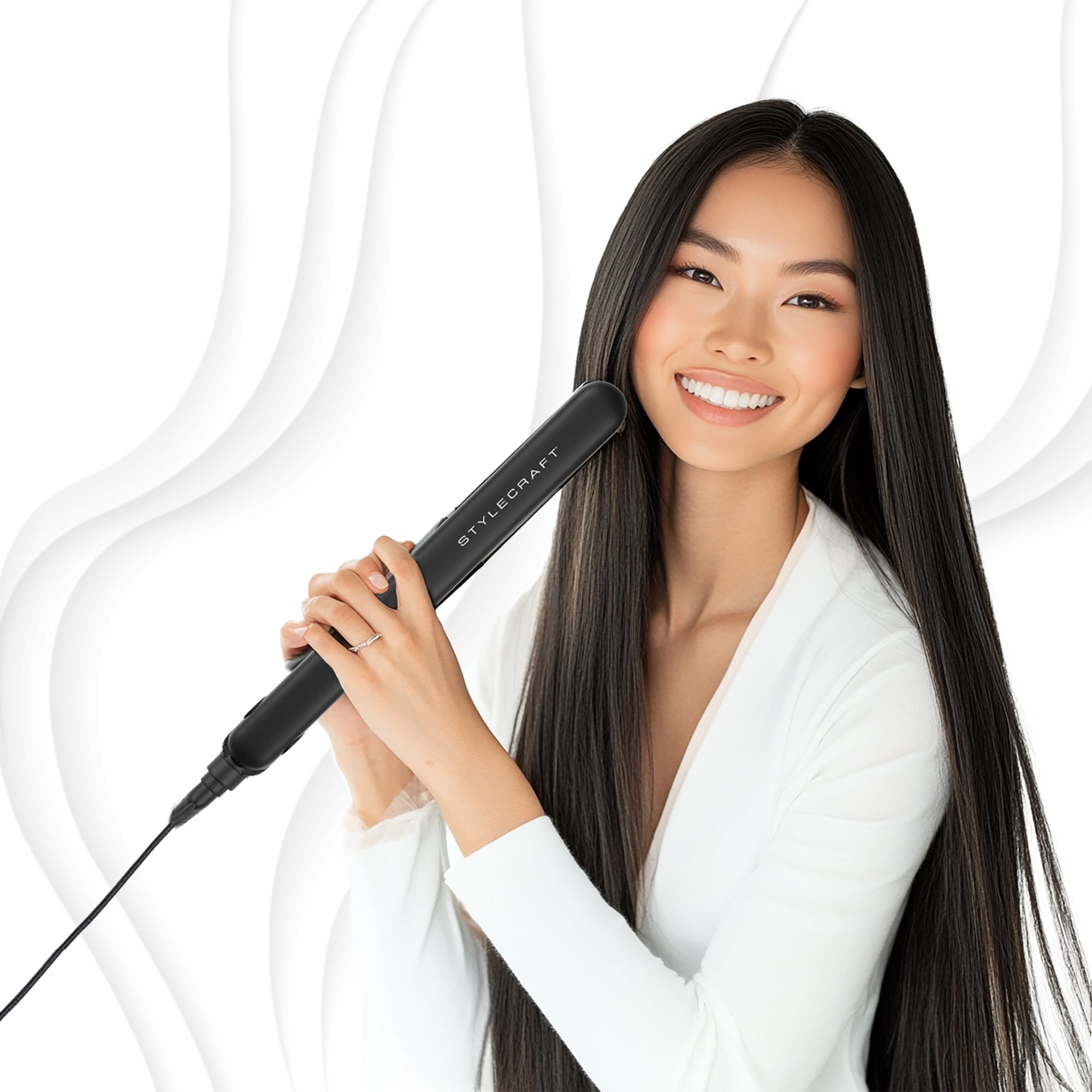
Why It Matters:
- Because of titanium’s fast, even heating, you often need fewer passes. This reduces heat exposure and mechanical stress, lowering the risk of damage.
- Ionic output and vibration help seal the cuticle and lock in moisture, so you get slick, frizz‑free hair without over‑drying or roughness.
- Precision heat control and ergonomic design mean you can adapt the tool to your hair’s needs, whether fine, fragile, or coarse.
Sage Vibrating Flat Iron: Reliable, Consistent Heat for All Hair Types

Why It Matters:
- Consistent heat and ultra-thin titanium plates mean efficient styling with minimal friction, translating again to fewer passes and less heat stress.
- High max temp plus precise control make it a reliable option for thick or coarse hair that often resists ceramic irons.
- For users who prioritize speed, consistency, and adaptability across hair types, Stay‑Temp is a strong pro‑level choice.
Key Takeaway
If you’re deciding between “titanium vs. ceramic flat iron,” the Sage and Stay‑Temp lines show why titanium can be more than just a material, with ion output, vibration, temperature stability, and smart engineering.
- Choose Sage for premium glide, shine, and gentle styling; great for fine to medium hair or anyone who wants salon‑smooth finish.
- Choose Stay‑Temp if you need fast, consistent, powerful heat for coarse or resistant hair, and want a versatile tool that works on multiple hair types.
How to Care for Your Titanium Flat Iron—and Your Hair
A high-quality titanium flat iron is an investment. Treat it well, and it will treat you well in return. Follow these best practices to maximize performance, prevent damage, and extend the life of your flat iron.
1. Always Prep with Heat Protectant
Titanium transfers heat quickly, so proper protection is non-negotiable. Using the right product prevents heat damage while allowing smooth, shiny results.
Look for:
- Lightweight sprays
- Thermal mists
- Professional-grade protectants with hydrolyzed proteins
2. Use the Right Temperature for Your Hair Type
Titanium can reach very high temperatures, but contrary to what you might be told, higher heat doesn’t mean “more damage” if used wisely. Follow this guide to choose the right setting:
- Fine or fragile hair: 300–350°F
- Medium hair: 350–380°F
- Thick, coarse, or resistant hair: 380–450°F
- Keratin or smoothing treatments: Follow the treatment’s exact guidelines
3. Work in Clean, Dry Sections
Titanium and moisture do NOT mix well! If you attempt to straighten wet hair, you run the risk of steaming or sizzling your hair. Be sure to always:
- Fully dry your hair before styling
- Detangle your hair thoroughly
- Divide your hair into manageable sections for consistent and even straightening
4. Slow, Controlled Passes
You invested in the titanium, so let the titanium do the work for you. Avoid racing or clamping too aggressively, and keep the following in mind:
- One or two steady passes over a section are better than four frantic ones
- Controlled movement reduces breakage, frizz, and heat stress
- Slow and steady wins a polished finish from root to tip
5. Clean Your Plates Regularly
Product buildup can reduce glide, heat transfer, and performance. Follow these tips to keep your plates looking and performing good as new:
- Wipe down with a microfiber cloth when the iron is completely cool
- Use 70% isopropyl alcohol for stubborn residue
- Avoid abrasive scrubbing pads or harsh cleaners. Yes, titanium is strong, but your hair’s finish is delicate
6. Store It Properly
Protect your iron and prolong its life with proper storage. Storing it properly also helps prevent accidents and keeps it ready for consistent performance.
We suggest:
- Heat-resistant mats
- Storage sleeves
- Designated tool organizers to prevent cord damage
7. Avoid Dropping It
Titanium is durable, but internal electronics still have feelings. Handle your iron carefully to:
- Avoid breakage or misalignment
-
Maintain consistent heat and performance
Protect your investment over the long term
Frequently Asked Questions
Is titanium or ceramic better for frizzy hair?
Titanium is generally better for frizz thanks to its high heat capacity and consistent performance. It smooths the cuticle quickly, seals in moisture, and reduces flyaways with fewer passes. Ceramic can help—especially on finer hair—but typically needs more passes and longer heat exposure.
Which is safer for hair: titanium or ceramic?
Both can be safe when used properly. Ceramic heats more gently, which suits fine or fragile hair. Titanium heats faster and more consistently, allowing quicker styling with fewer passes, ultimately lowering total heat exposure. With the right temperature, technique, and a heat protectant, titanium can be just as safe as ceramic.
Does titanium damage hair more?
Damage comes from excessive heat or poor technique, not the material itself. Titanium’s efficiency reduces the number of passes, friction, and cumulative heat. Used at the right temperature with a protectant, it’s a safe and effective option—even for frequent styling.
Are ceramic-coated plates the same as solid ceramic plates?
“Ceramic” plates are often just metal with a thin coating that wears down over time, affecting smoothness and heat consistency. Solid ceramic plates distribute heat more evenly, but titanium still offers the best speed, durability, and overall performance.
Can titanium be used on fine or fragile hair?
Yes—with caution. Keep the temperature low (around 300–350°F) and always use a heat protectant. Because titanium requires fewer passes, it can actually be gentler than slower ceramic irons when used correctly.
How often should I use a titanium flat iron?
It depends on your hair type and health. With proper temperature and protection, daily use is possible. Coarse hair may only need 2–3 uses per week, while fine or fragile hair should limit heat-styling to occasional use.
How do I choose between titanium and ceramic if I have mixed hair types?
Titanium is usually the better all-around option. Its steady heat gives consistent results across varying textures without constant adjustments. Moderate temps and clean sectioning protect finer areas while efficiently smoothing coarser ends. Ceramic often requires more passes on thicker sections, increasing heat exposure overall.